20 Traditional Swedish Foods to Try in Stockholm (2026)
Swedish food Stockholm — 20 traditional dishes with where to eat them. Meatballs, herring, gravlax, kanelbullar.
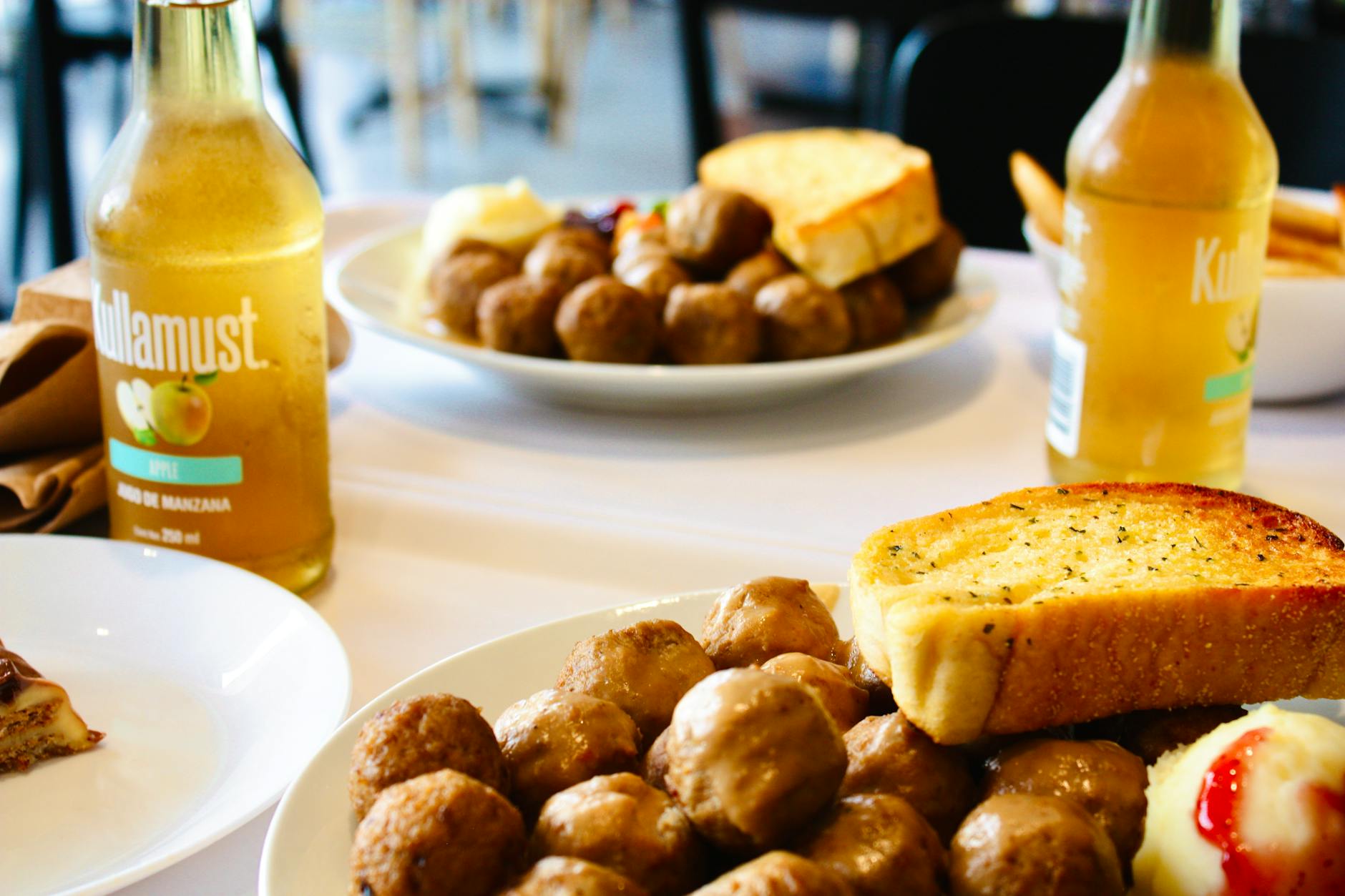
The first time a Stockholm friend slid a plate of golden köttbullar toward me with a spoonful of glistening lingonberry jam on the side, I understood the appeal instantly. Traditional Swedish food is comfort food with a coastal accent: hearty meat and potatoes on one side, cured fish and forest berries on the other.
Traditional Swedish food is the country’s home cooking, known as husmanskost. It centres on meatballs (köttbullar), cured and pickled fish, potato dishes, and rye bread, seasoned lightly and often paired with tart lingonberry or dill. The best-known symbol is the smörgåsbord, a spread of cold and hot dishes eaten in a set order. For where to eat it, start with my Stockholm Food & Restaurants guide.
This is a dishes-to-try guide written for a hungry visitor. You will get 20-plus classics, the Swedish names so you can read a menu, an at-a-glance table, real Stockholm addresses, and rough prices. Hours and prices shift, so confirm current details before you go. Some vendors move around the food halls too.
Traditional Swedish food you must try: at a glance
Here is a shortlist to scan before you dive into the detail. Prices are per dish and approximate.
| Dish | What it is | Where to try it in Stockholm | Rough price |
|---|---|---|---|
| Köttbullar | Meatballs, cream gravy, lingonberry | Pelikan, Tradition, Bakfickan | around 165-245 SEK |
| Sill (pickled herring) | Herring in mustard, dill, onion | Östermalms Saluhall, any smörgåsbord | around 95-160 SEK |
| Gravlax | Sugar-salt cured salmon, dill | Sturehof, Operakällaren | around 175-260 SEK |
| Toast Skagen | Shrimp salad on toast, bleak roe | Sturehof, Riche | around 195-285 SEK |
| Raggmunk | Potato pancakes, bacon, lingon | Pelikan, Tennstopet | around 155-215 SEK |
| Janssons frestelse | Potato-sprat-cream gratin | Pelikan, Tennstopet | around 145-195 SEK |
| Ärtsoppa & pannkakor | Pea soup then pancakes (Thursdays) | Pelikan, Tennstopet | around 145-195 SEK |
| Semla | Cardamom bun, almond paste, cream | Tössebageriet, Vete-Katten | around 55-95 SEK |
| Kanelbulle | Cinnamon-cardamom bun | Vete-Katten, Café Saturnus | around 40-65 SEK |
| Prinsesstårta | Green marzipan sponge cake | Sturekatten, Vete-Katten | around 65-95 SEK |
Prefer to eat cheaply? My guide to the Best Cheap Eats in Stockholm Under 150 SEK covers dagens lunch deals where many of these dishes cost far less at midday.
Husmanskost: the heart of Swedish cooking
Husmanskost translates loosely as “house manner cooking” — the everyday food Swedes grew up on. Think meat, potatoes, gravy, and something pickled or preserved for balance. It is honest, filling, and built around what keeps through a long winter.
You will see it on weekday “dagens” (dish of the day) menus, usually served 11am to 2pm with bread, salad, and coffee included for around 135-175 SEK. That set-lunch tradition is the single best-value way to eat traditional food in the city.
My reliable pick for the full husmanskost experience is Pelikan in Södermalm (Blekingegatan 40), a beer hall that has been serving since the early 1900s under high painted ceilings. Tennstopet in Vasastan (Dalagatan 50) and Tradition in Gamla Stan run it a close second.
Swedish meatballs (köttbullar): the icon
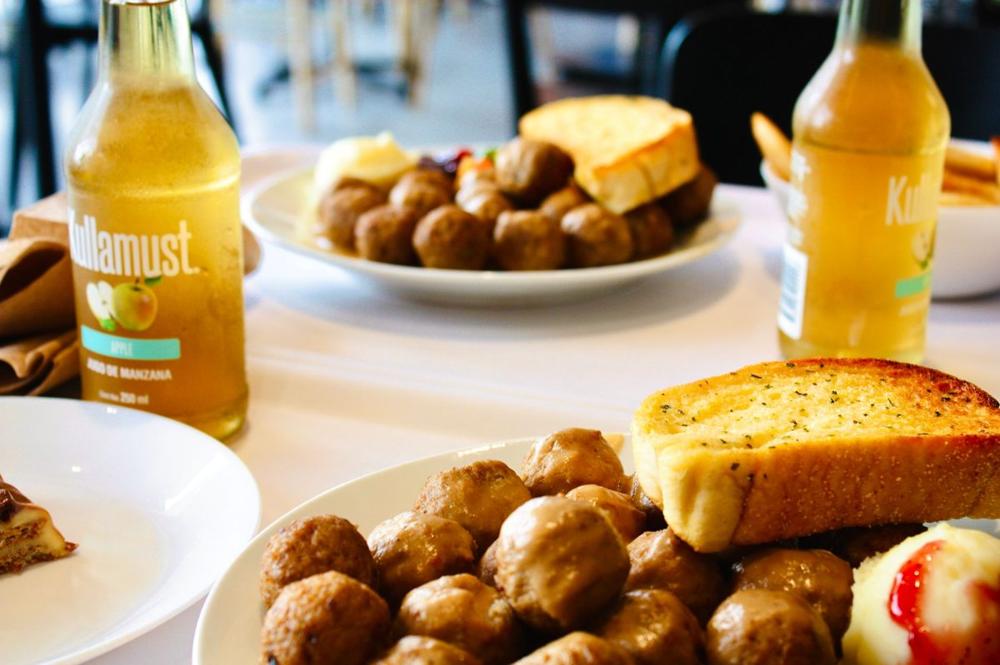
If you try one dish, make it köttbullar. These are small meatballs of minced beef and pork bound with breadcrumb, milk, and grated onion, fried and served with a silky cream gravy, mashed or boiled potato, quick-pickled cucumber, and lingonberry jam. The lingon is the point — its sharpness cuts the richness.
My favourite versions:
- Pelikan (Södermalm) — the textbook plate in a proper old beer hall. Around 195-225 SEK.
- Bakfickan (the “back pocket” of Operakällaren, by the Royal Opera) — counter seating, refined cooking, gentler prices. Around 235 SEK.
- Tradition (Österlånggatan, Gamla Stan) — classic technique, tidy modern plating.
- Tennstopet (Vasastan) — a 1930s pub-restaurant locals love.
Curious about IKEA? Its Kungens Kurva flagship does serve meatballs at scale, and honestly they are fine — just don’t let them be your only sample. For a deeper ranking, see my guide to the Best Swedish Meatballs in Stockholm.
Fish and seafood traditions
Sill (pickled herring)
Herring is the backbone of any smörgåsbord. You will meet several cures: mustard (senapssill), dill, onion, and the sweet-clear glasmästarsill or “glazier’s herring”. Swedes eat it on knäckebröd or boiled potato with hard-boiled egg, sour cream, and chives. The herring counter at Östermalms Saluhall is a good place to taste a flight side by side.
Gravlax
Gravlax is salmon cured (not smoked) in salt, sugar, and dill, sliced thin and served with hovmästarsås, a sweet dill-mustard sauce. Sturehof and Operakällaren both do a lovely plate. Expect around 175-260 SEK as a starter.
Toast Skagen
This is Stockholm’s lunch darling: chilled shrimp tossed with mayonnaise, dill, lemon, and a little red onion, piled on buttery fried bread and crowned with orange bleak roe (löjrom). Sturehof (Stureplan, going since 1897) and Riche on Birger Jarlsgatan are the benchmarks. Around 195-285 SEK.
Räksmörgås
The räksmörgås is a gloriously over-loaded open shrimp sandwich on dark rye with egg, mayo, lemon, and dill — often taller than it is wide. Lisa Elmqvist inside Östermalms Saluhall serves the destination version. For more like this, see my roundup of 25 Best Restaurants in Stockholm.
Surströmming (fermented herring) — the honest warning
Surströmming is fermented Baltic herring, and it is genuinely one of the most pungent foods on earth. Cans are opened outdoors for good reason; the smell can clear a room. It is eaten late summer on thin tunnbröd with almond potato, onion, and sour cream. If you want to try it, do so with locals who know the ritual, and go in with an open mind and a strong stomach. A few Stockholm spots run surströmming nights around August; call ahead.
Potato classics
Janssons frestelse
“Jansson’s temptation” is a creamy gratin of julienned potato, onion, and tinned sprats (usually labelled anchovies) baked until golden. It is a Christmas-table fixture but appears year-round at traditional restaurants like Pelikan and Tennstopet. Around 145-195 SEK.
Raggmunk
Raggmunk are thin, crisp potato pancakes fried in butter and served with streaky bacon and lingonberry — Swedish comfort food at its most direct. Pelikan does a reliable plate for around 155-215 SEK.
Kroppkakor
Less common but worth seeking out, kroppkakor are dense potato dumplings stuffed with diced pork and onion, traditionally from the southern island of Öland and Blekinge. Served with melted butter and lingonberry, they are proper winter fuel. Look for them on seasonal husmanskost menus.
Hasselbackspotatis
The fan-sliced, butter-and-breadcrumb-roasted hasselbackspotatis was invented at the Hasselbacken restaurant on Djurgården in the 1950s. You can still order it at the source.
Soups, stews and hash
Ärtsoppa med pannkakor
Yellow pea soup with pork and mustard, followed by thin pancakes with jam and cream, is a Thursday tradition that dates back centuries. Many old-school restaurants still honour it with a Thursday special. It is warming, cheap, and deeply Swedish. Around 145-195 SEK for the pair.
Kalops
Kalops is a gentle beef stew scented with allspice and bay, served with boiled potato and pickled beetroot. A Sunday-lunch kind of dish and a husmanskost staple.
Pytt i panna
Pytt i panna is Sweden’s tidy answer to leftovers: diced potato, onion, and meat fried crisp and topped with a fried egg and pickled beets. Cheap, satisfying, on nearly every husmanskost menu. Pelikan and Tennstopet both do it well.
Fika: coffee, buns and cakes
Fika is the Swedish ritual of pausing for coffee and something sweet, ideally with company. It is less a snack than a daily habit, and no food guide is complete without it. For a proper deep-dive on cafés, see my picks for the Best Cafes in Stockholm for Fika, and for the pastry itself, the Best Bakeries in Stockholm.
Kanelbulle (cinnamon bun)
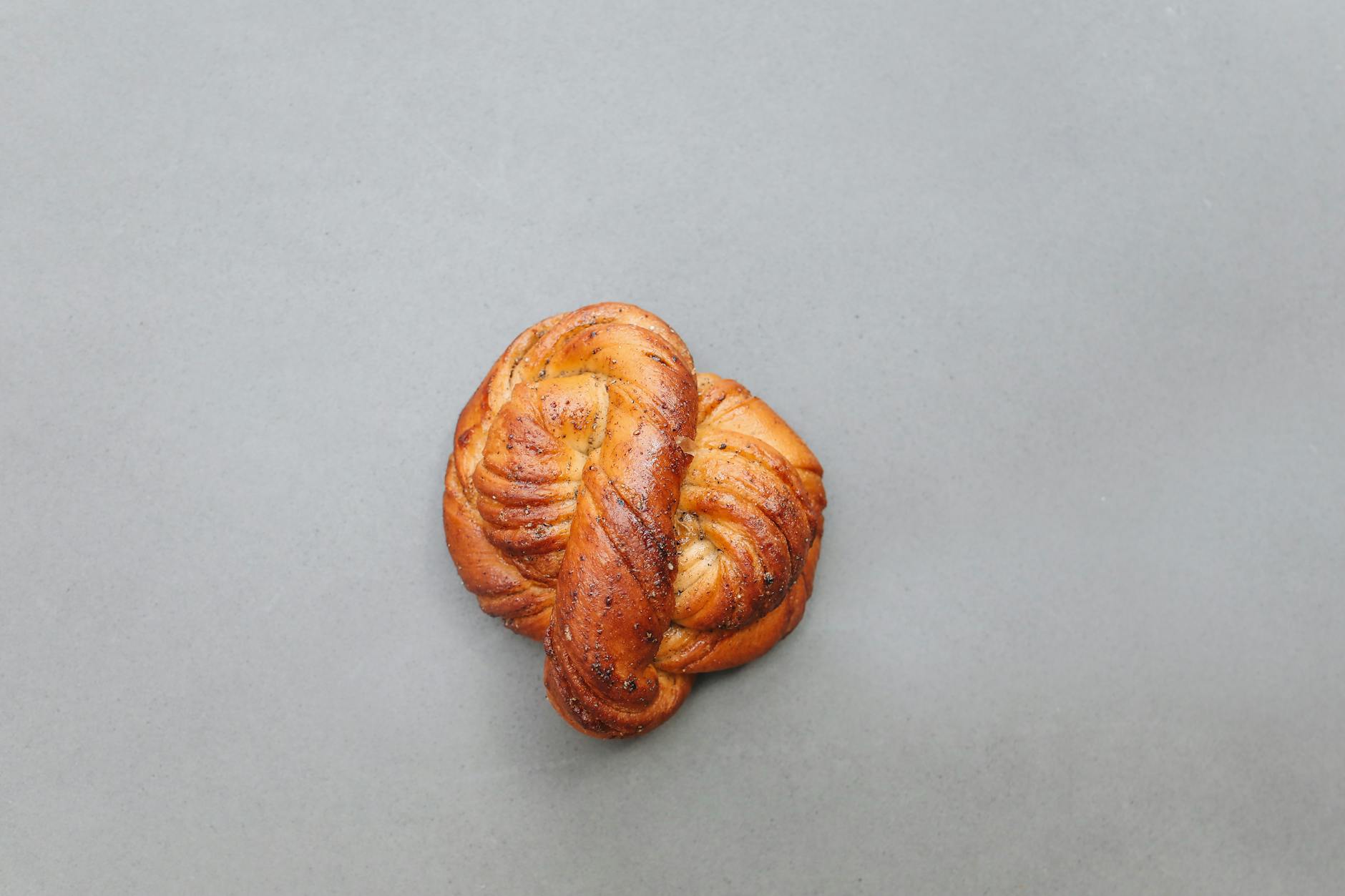
The kanelbulle is a cardamom-scented dough coiled with cinnamon and pearl sugar. Swedes love it so much there is a national Cinnamon Bun Day on 4 October (kanelbullens dag), when roughly seven million buns are sold in a single day. Vete-Katten on Kungsgatan has baked them since 1928; Café Saturnus on Eriksbergsgatan is famous for outsized ones. Around 40-65 SEK.
Semla
The semla is a cardamom bun split and filled with almond paste and a cloud of whipped cream, dusted with icing sugar. Traditionally eaten on Fettisdagen (Shrove Tuesday), it now appears in bakeries from January to Easter. Tössebageriet on Karlavägen is the classic Stockholm address. Around 55-95 SEK.
Prinsesstårta (princess cake)
Prinsesstårta is the celebration cake: layers of sponge, vanilla pastry cream, whipped cream, and raspberry jam under a smooth dome of pale-green marzipan. Sturekatten and Vete-Katten both serve tidy slices. Around 65-95 SEK.
Kladdkaka
Kladdkaka is a dense, fudgy, barely-set chocolate cake — think brownie’s gooier cousin — served with cream or berries at nearly every café in town.
Prefer a leisurely weekend spread? Many of these pastries anchor Stockholm’s brunch tables too; see my Best Brunch Spots in Stockholm.
Bread, dairy and pantry staples
Knäckebröd (crispbread) turns up at almost every Swedish meal — Wasa is the supermarket staple, while bakeries sell thicker artisan rounds. Filmjölk is a tangy, drinkable cultured milk Swedes pour over muesli at breakfast; try it in any hotel or café spread. Lingon (lingonberry) and hjortron (cloudberry) are the two forest berries you will meet most — lingon as the tart red jam beside savoury plates, cloudberry as a rare amber preserve spooned over cheese or waffles, especially up north.
The smörgåsbord and seasonal spreads
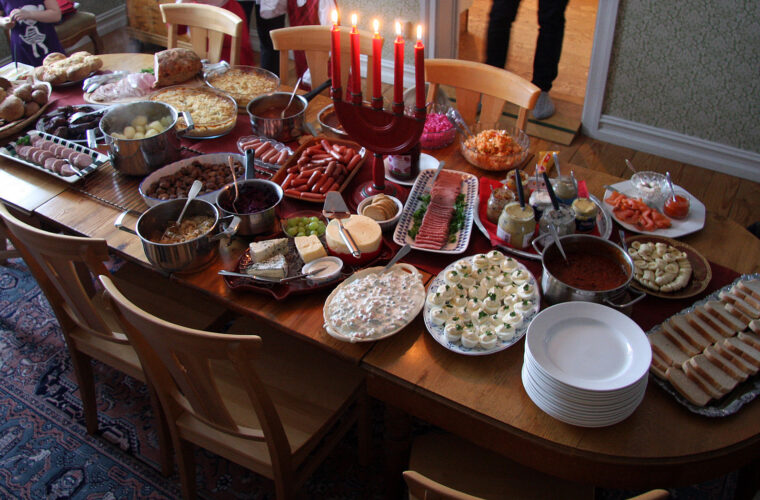
The smörgåsbord is a buffet eaten in courses, not a free-for-all. The order matters: cold fish first (herring, then gravlax and other seafood), then cold cuts and salads, then hot dishes (meatballs, Janssons, sausages), and finally cheese and dessert. Take a fresh plate each round.
Julbord is the December Christmas version, expanded with glögg (mulled wine), julskinka (Christmas ham), lutfisk (lye-cured dried cod), and rice porridge. Påskbord is its Easter cousin, heavy on eggs and herring. In August, keep an eye out for kräftskiva, the crayfish party — boiled dill crayfish eaten outdoors with snaps and paper hats.
For a classic Stockholm smörgåsbord, Operakällaren by the Royal Opera is the heritage choice, with the Verandan at the Grand Hôtel and Ulla Winbladh on Djurgården as lovely alternatives. A smörgåsbord lunch runs around 345-495 SEK; a full julbord dinner around 645-945 SEK. Confirm seasonal dates and book ahead.
Snaps and what Swedes drink
Traditional meals — especially herring-heavy ones and crayfish parties — come with snaps, small chilled shots of aquavit flavoured with caraway, dill, or fennel, downed between spirited drinking songs. At Christmas you will find glögg, a warm spiced wine. Note that strong drink is sold only through the state Systembolaget shops, which close early and all day Sunday, so plan ahead.
Modern Swedish cooking, if you want to splurge
Stockholm’s fine-dining scene reinterprets these same ingredients — foraged herbs, game, Baltic seafood — through a New Nordic lens. Frantzén holds three Michelin stars, with a tasting menu around 5,500 SEK per guest. Mathias Dahlgren’s Rutabaga (plant-forward, Grand Hôtel), Ekstedt (cooked entirely over open fire), and Aira on Djurgården are other standouts. Reserve weeks ahead and confirm current pricing.
Frequently asked questions
What is the most famous Swedish food?
Swedish meatballs (köttbullar) are the most internationally famous, thanks partly to IKEA. Within Sweden itself, pickled herring (sill), gravlax, the cinnamon bun (kanelbulle), and the whole smörgåsbord tradition are just as iconic and just as loved.
What do Swedes eat for traditional meals?
Lunch is usually the hot meal — meatballs, a fish dish, or soup with pancakes. Dinner is often lighter: open sandwiches (smörgås), salads, or something simple. The Thursday pea soup and Sunday roast (kalops or roast pork) traditions still hold in many households.
Where can I try Swedish meatballs in Stockholm?
Pelikan in Södermalm is the classic old beer hall for köttbullar. Bakfickan by the Royal Opera does a refined plate at gentler prices, Tradition in Gamla Stan pairs classic technique with modern plating, and Tennstopet in Vasastan is a locals’ favourite.
What is fika?
Fika is the Swedish coffee-and-cake break, taken mid-morning or afternoon, usually with company. It is more social ritual than snack — offices genuinely stop for it. A cinnamon bun (kanelbulle) or other pastry with strong filter coffee is the classic pairing.
Where is the best smörgåsbord in Stockholm?
Operakällaren by the Royal Opera is the historic flagship and the benchmark experience. The Verandan at the Grand Hôtel is a beautiful classic alternative with harbour views, and Ulla Winbladh on Djurgården offers a warm, traditional setting. Book ahead and check seasonal availability.
What is julbord?
Julbord is the Christmas smörgåsbord, served through December only. It expands the usual spread with glögg (mulled wine), julskinka (Christmas ham), lutfisk (lye-cured dried cod), meatballs, and rice porridge. It is a festive centrepiece of the Swedish holiday season and best booked in advance.
What is gravlax?
Gravlax is salmon cured — not smoked — in a mix of salt, sugar, and dill for a day or two, then sliced thin. It is served with hovmästarsås, a sweet dill-mustard sauce, on rye bread or as part of a smörgåsbord. The texture is silky and the flavour clean and lightly sweet.
What is the best Swedish pastry?
The kanelbulle (cinnamon-cardamom bun) is the everyday national favourite. The semla (cream-and-almond-filled cardamom bun) is the seasonal star of late winter, and prinsesstårta (green marzipan princess cake) is the celebration cake of choice. Try all three if you can.
Where do Stockholmers eat traditional food?
Locals head to Pelikan, Tennstopet, and Tradition for husmanskost, especially at weekday lunch. Sturehof is the go-to Stockholm classic at any hour. The food-hall vendors at Östermalms Saluhall and Hötorgshallen also serve genuinely good traditional plates.
Is Swedish food expensive?
It can be, but weekday “dagens lunch” deals are great value at around 135-175 SEK including bread and coffee. A mid-range dinner dish runs roughly 165-285 SEK, a smörgåsbord lunch around 345-495 SEK, and fine-dining tasting menus well into the thousands. Prices change, so confirm before you go.
Final thoughts
The traditional Swedish food I keep coming back to is not the fanciest — it is a plate of köttbullar at Pelikan on a grey afternoon, or a warm kanelbulle mid-fika. Start with the meatballs and a herring flight, build up to a proper smörgåsbord, and save room for cake. Eat at lunch when the classics are cheapest, and don’t skip the fika. It is the most Swedish thing you can do.
Prices and opening hours change often; please confirm current details directly with each venue before visiting.
Photo credits: Dainé Zeferino on Pexels.
Many of these dishes belong to a particular day: semla on Fat Tuesday, herring and new potatoes at Midsummer, crayfish in August, saffron buns at Lucia and the julbord through December. Our calendar of events in Stockholm gives the dates, so you can plan a trip around the food.
The best place to try most of these dishes at once is a julbord, the Christmas buffet served from late November. Our guide to Stockholm at Christmas explains the order to eat it in, what it costs and which restaurants to book.
Herring, gravad lax, meatballs, Janssons frestelse and rice pudding all meet once a year on the julbord, the Christmas buffet Stockholm restaurants serve from mid-November to Christmas Eve. Our julbord Stockholm guide explains the rounds, the dishes and which tables are worth the money in 2026.
The sweet side of the national menu deserves its own page. Our guide to Swedish pastries covers the cinnamon bun, the semla and the princess cake, the Christmas saffron buns and ginger thins, and the small classics every konditori sells, with the dates that matter and what they cost.
If you’d like to taste your way through these dishes with a guide, our honest guide to Stockholm food tours covers what the tours cost in 2026, what you’ll eat, and a do-it-yourself route through the market halls, a konditori and a traditional restaurant.