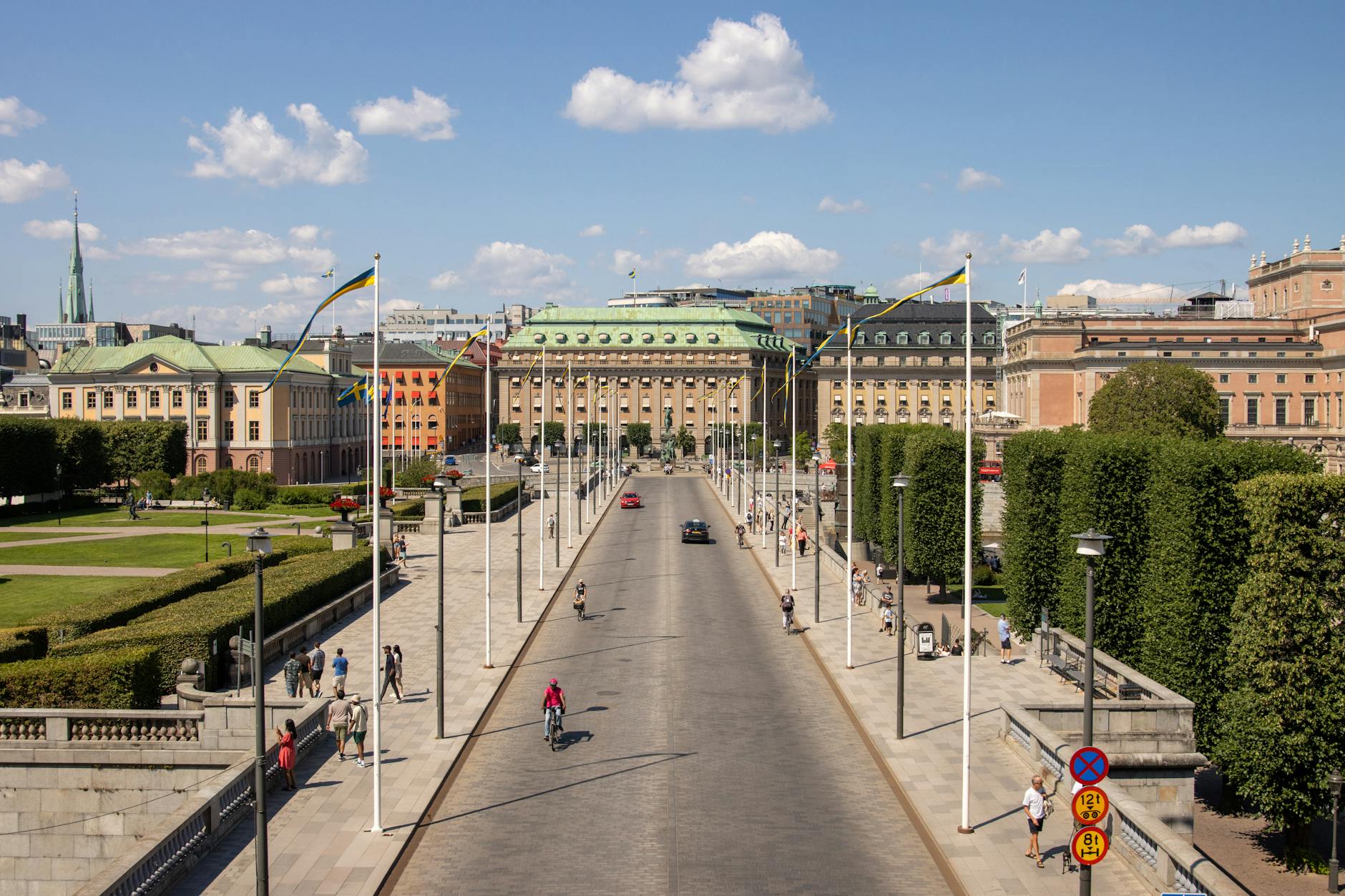
Yes — but the honest answer comes with conditions, and I’d rather give you those than a brochure. Is Stockholm worth visiting? It absolutely is if you like calm, design, water and walking; it’s a harder sell if you’re chasing low costs, big-volume nightlife or year-round warmth. Land in the wrong month and you’ll trudge through six hours of damp, expensive daylight wondering what the fuss is about. Land in late June and you get 18-plus hours of soft Nordic light, a 30,000-island archipelago on your doorstep, and one of Europe’s most beautifully designed capitals to wander through.
This is the candid 2026 take: what Stockholm genuinely nails, where it falls short, who should go and who should pick somewhere else. I’ll be specific about the trade-offs — cost, weather, crowds — and how it stacks up against Copenhagen, Oslo and Helsinki. If you want the full planning picture afterwards, this sits alongside our complete Stockholm travel guide.
The short answer: who Stockholm is worth it for
Rather than a blanket yes, here’s who I’d send with confidence, and who I’d gently redirect.
Strongly worth it for first-time Scandinavia travellers, design and architecture lovers, museum people (the Vasa is world-class, Skansen genuinely one of a kind), anyone drawn to the archipelago, families with kids roughly 4–12 (Djurgården is superb), summer visitors after long daylight and mild weather, couples wanting a calm, walkable, design-forward city, and LGBTQ+ travellers — this is one of Europe’s most welcoming capitals.
Worth it with caveats for budget travellers (doable, but you’ll need the tactics below), winter visitors (magical in mid-December, grim in November or deep February if you don’t love the cold), food travellers (the high end shines, the mid-range is patchy), and nightlife maximalists (good, but no Berlin or London).
Probably not worth it if your top priority is minimum cost (Tallinn, Riga or Vilnius deliver more for less), if you’re chasing ancient history (Stockholm’s medieval core is small next to Rome, Athens or Istanbul), or if you want beaches and heat — the sea sits at 16–20°C even in high summer, and anything outside June to August means layers.
What Stockholm gets uniquely right
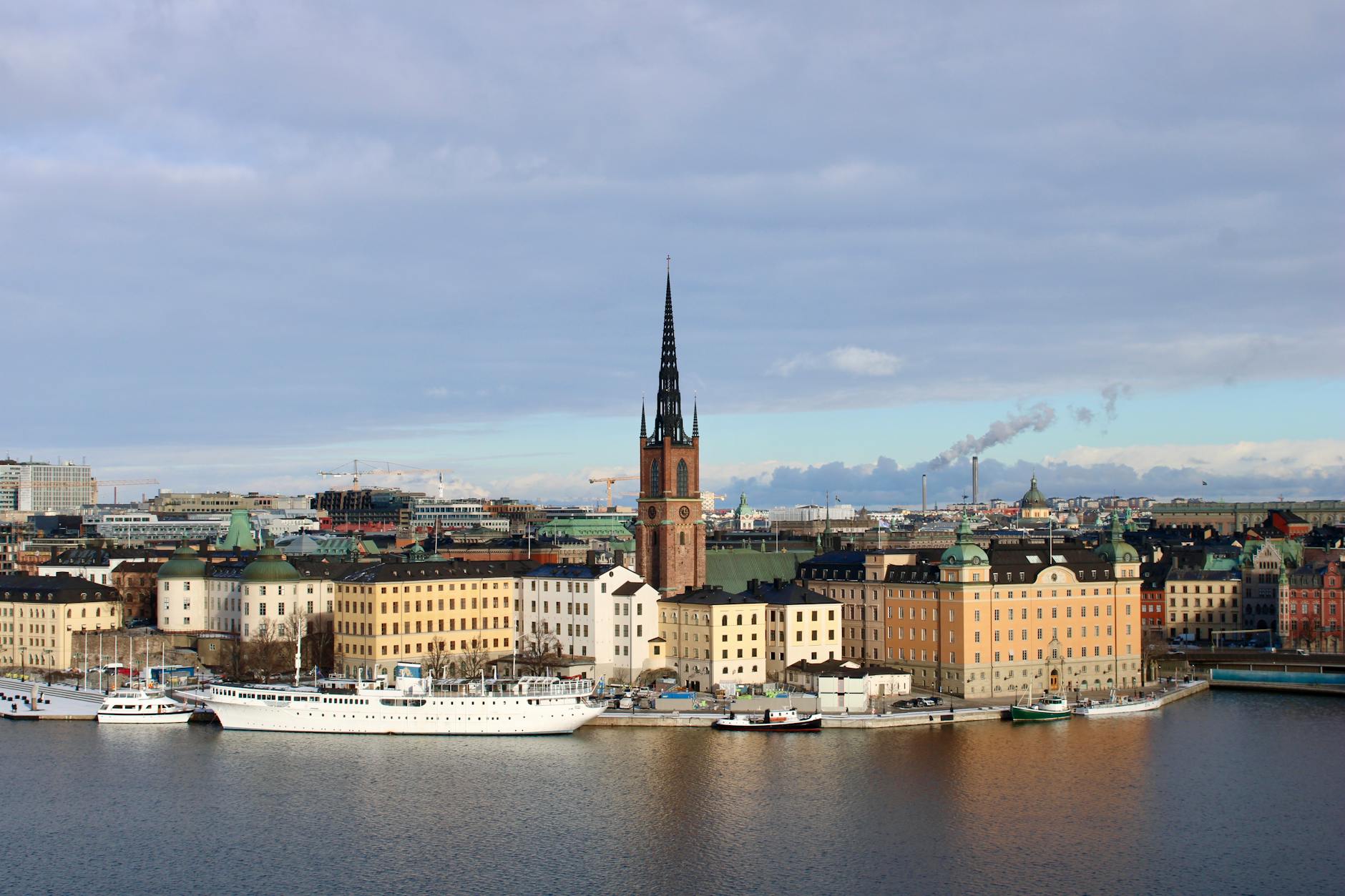
The water is everywhere. Built across 14 islands and wrapped in that vast archipelago, the city keeps water in view from almost every district, and the ferries are part of the transit system rather than a tourist gimmick. On a hot July day you can swim in the centre. It genuinely feels structurally different from any other European capital.
The public transport is a joy. The metro is fast, spotless and punctual — and doubles as an art gallery, with public artworks in the great majority of its stations. Buses, trams, ferries and commuter trains all run on one ticket, under-7s travel free, and every station has lifts, which matters with a pram or a suitcase.
Design is baked in, not bolted on. It’s simply how the city looks and works, from cafés and hotels to public buildings and those metro platforms. Acne, Filippa K, COS, Svenskt Tenn, String and, yes, IKEA all trace back here.
The museums punch far above the city’s weight. The Vasa (the only largely intact 17th-century warship anywhere), Skansen (the world’s oldest open-air museum, from 1891), the Nobel Prize Museum, the Royal Palace, the ABBA Museum, Fotografiska, the Nationalmuseum and Moderna Museet form a line-up that shames cities several times the size.
It’s safe, and it feels it. Stockholm is among Europe’s safest capitals, with low pickpocketing rates by big-city standards and a visible respect for personal space. Solo travellers and families alike tend to find it easy — and if that’s your main worry, our honest local guide to whether Stockholm is safe for tourists goes deeper.
And then there’s the archipelago. Thirty thousand islands stretch east of the city, reachable on Waxholmsbolaget ferries from 25 minutes to three hours out. No other European capital has anything quite like it, whether as a day trip or an overnight.
What Stockholm doesn’t get right
It’s expensive. This is the big one, and it’s real — Stockholm sits among the priciest capitals in Europe. A mid-range day runs roughly 1,500–2,200 SEK a head; a couple at a mid-range hotel with two dinners and an attraction can easily spend the equivalent of $300–400 in a day. Lisbon, Prague or Athens will cost less than half.
The mid-range food is uneven. The Michelin tier is superb and the neighbourhood dagens lunch (around 130–160 SEK) is excellent value, but the 250–400 SEK dinner bracket is hit-or-miss — plenty of places serve merely fine food at painful prices because tourist demand never lets up.
The dark months really are dark. December averages about six hours of daylight, roughly 08:45 to 14:45; January and February manage seven to nine. November is the worst of all — dark, often wet, and not yet lit up for Christmas. If you’re sensitive to low light, take that seriously.
The service is reserved. Staff are competent and polite rather than effusive. If you’re expecting Italian or Spanish warmth it can read as cold, but it’s cultural reserve, not rudeness — reset your expectations and it stops bothering you.
The old bit is small. Gamla Stan is authentically historic, with a 13th-century street plan, but you can walk it end to end in 45 minutes. For “Old Europe” in depth, Rome, Prague, Kraków or Bruges give you more.
And alcohol is pricey and controlled. The state monopoly, Systembolaget, handles all stronger drink sales, and bar prices are steep (cocktails 145–225 SEK). If drinking is central to your trips, factor that in. For the money mechanics generally, our Stockholm currency and money guide is worth a read.
Stockholm vs the other Nordic capitals
People usually weigh Stockholm against its neighbours, so here’s my honest read.
Stockholm vs Copenhagen
Copenhagen edges it on bicycle culture, a deeper restaurant scene and denser street life. Stockholm wins on sheer scale and water, on the archipelago (no contest), on cleaner and faster transit, on museum firepower (the Vasa alone), and on those long northern summer evenings — and it’s usually a touch cheaper. Choose Stockholm for water, nature and grandeur; choose Copenhagen for streetlife, food and compact walkability.
Stockholm vs Oslo
Oslo has the drama of a fjord setting, the Munch museum and some striking modern architecture. Stockholm counters with a more walkable old city, far greater museum density, the archipelago for day trips, and a much deeper café, restaurant and nightlife scene — again at slightly lower prices. Pick Stockholm for a city break with water on the side; pick Oslo if Norway itself, and onward fjords, is the point.
Stockholm vs Helsinki
Helsinki offers serious design heritage (Marimekko, Iittala, Aalto), lower prices, summer islands and a more off-the-trail feel. Stockholm brings bigger scale, stronger museums, a far more varied archipelago and denser food, nightlife and design retail. Choose Stockholm if it’s your first Nordic city; choose Helsinki if you’ve done Stockholm and want something quieter and more design-obsessive.
How many days is Stockholm worth?
Three days is the sweet spot for a first visit — enough for Gamla Stan, the Djurgården museums, City Hall and one day trip or archipelago half-day, and by far the most common length. Five days is the comfortable version, adding an archipelago overnight at somewhere like Sandhamn or Grinda, a trip to Drottningholm or Uppsala, and a slower local day on Söder. One to two days works for a cruise stop or layover but feels rushed — stick to Gamla Stan and Djurgården. Seven-plus only makes sense with extended archipelago time or side trips to Uppsala, Sigtuna and Gotland. Our guide to how many days in Stockholm breaks this down properly.
When is Stockholm worth visiting?
Late May to early September is the strong window: peak daylight, mild weather, everything open. Mid-December is the other high point, with Christmas markets, the Lucia celebrations and festive lighting. April and October are worth it with adjustments — some outdoor attractions scale back, but prices drop and crowds thin. Early November and the deep January–February stretch are the cheapest but hardest, and I’d genuinely skip late November (dark and cold with no festive payoff yet) and the dead fortnight from late January into February. Pack accordingly whatever the season with the Stockholm packing list.

What to do to make the trip worth it
With three days, the high-payoff list is the Vasa Museum (about 90 minutes), a Gamla Stan wander (two to three hours), City Hall with the tower climb (90 minutes), Skansen (half a day), Drottningholm Palace (a half day, ideally reached by Strömma steamboat for the ride), and one archipelago half-day out to Fjäderholmarna if you can’t manage an overnight. With five days, add that archipelago overnight, the Nationalmuseum or Moderna Museet if art is your thing, and an evening cocktail at Tjoget over on Hornstull. The one rule I’d hammer home: don’t compress Stockholm into a single Old Town walk. The water, the museums and the archipelago are the city — skip them and you’ve skipped the point. A good Stockholm tourist map helps you see how close it all sits.
The honest budget reality
If cost is weighing on you, here’s roughly what to plan for. Hotels run around 1,800 SEK a night for budget, 2,500–3,500 for mid-range, and 4,000-plus for upscale; apartments often beat hotels on stays of four nights or more. Food is where you have the most control — 130–160 SEK for a weekday lunch, 250–400 for a casual dinner, 600–900 for a fine-dining tasting menu, with food halls and supermarkets roughly halving the bill. A metro pass is about 175 SEK a day or 450 for a week, museums 150–250 SEK each, and drinks add up fast (beer 75–95, wine 95–145, cocktails 145–225). Realistically, three days per person lands around 4,500–6,000 SEK on a budget, 7,500–10,500 mid-range, and 14,000-plus upscale.
What surprises first-time visitors
A few things catch almost everyone out. The quiet — Stockholm simply doesn’t have the volume of Paris or Rome, which reads as calming or eerie depending on your wiring. The sheer amount of water you see every single day crossing between islands. The midsummer night that never darkens, with usable light at 23:00 in late June that’s too special to miss. The dress codes at upmarket restaurants and Stureplan clubs, where trainers get people turned away regularly. The cashless reality — you need no cash anywhere, and some shops no longer take it. And the fact that the tap water beats the bottled stuff; ask and restaurants will happily bring it.
Why some people say it wasn’t worth it
The complaints are predictable, and mostly manageable. “Too expensive” is the big one — real, but softened hugely by food-hall meals, an SL pass and dodging restaurant alcohol markups. “Too cold and dark” only bites if you visit November to February without expecting it; go in summer or mid-December instead. “Felt unfriendly” is that cultural reserve again, not hostility. “Too quiet” is fair next to Berlin or London — Stockholm is medium-energy by design. And “too touristy in summer” is true of Gamla Stan in July specifically, which June, late August or September neatly solve without losing the weather. If it’s your first trip, our first time in Stockholm guide heads off most of these before they happen.
Stockholm vs other European capitals
Quick gut-check if you’re deciding between cities. Choose Stockholm over Paris if you want calm and walkability over density; over Berlin if you want design and order over nightlife and grit; over Amsterdam if you want water and archipelago over canals and bikes; over Vienna if modern Scandinavian appeals more than imperial grandeur; and over Reykjavík if you want a proper city with water rather than a small town with nature on tap. It’s less about better or worse than about what you’re actually in the mood for.
The final answer
Stockholm is worth visiting if you want a calm, walkable, water-rich, design-led capital with a museum line-up that embarrasses its size, an unmatched archipelago at the door, and a culture that rewards slowing down. It’s not the trip if your non-negotiables are rock-bottom cost, big nightlife, warm weather or deep ancient history.
Go between late May and early September for the best version of it, stay three to five days, use the SL ferries instead of the tourist sightseeing boats, eat lunch in the food halls, drink the tap water, and take at least one archipelago half-day or overnight. Do that and you’ll leave with a clear verdict — and in my experience, most people’s verdict is that they want to come back for longer.
Frequently asked questions
Is Stockholm worth visiting?
Yes, for most travellers — especially first-time Scandinavia visitors, design and museum lovers, families, summer travellers and couples after a calm, walkable city. It’s a weaker fit if your priorities are minimum cost, warm-weather beaches, or intense nightlife, or if you’re unwilling to dress for cool weather outside the June–August window.
How many days do you need to visit Stockholm?
Three days is the sweet spot for a first visit, covering Gamla Stan, the Djurgården museums, City Hall and one day trip. Five days lets you add an archipelago overnight and a slower local day. One to two days works for a cruise stop or layover but feels rushed — focus on Gamla Stan and Djurgården if that’s all you have.
Is Stockholm worth visiting in winter?
Mid-December is strongly worth it, with Christmas markets, the Lucia celebrations and atmospheric snow. November and the January–February stretch are tougher: short, dark days, cold, and fewer festive lights. If you’re winter-visiting, aim for the Christmas period and avoid late November and the dead weeks of late January and early February.
Is Stockholm worth visiting in summer?
Very much so — late May through early September is the peak window, with up to 18-plus hours of daylight in June, mild temperatures, every attraction open and the archipelago fully accessible. July does get genuinely crowded in Gamla Stan, so June and late August tend to offer the best balance of weather and space.
Is Stockholm worth visiting for 3 days?
Yes — three days is the most common and well-tested itinerary. A typical split is Gamla Stan plus the Djurgården museums on day one, City Hall and Södermalm on day two, and Drottningholm Palace or a Fjäderholmarna archipelago trip on day three. It’s enough to get the measure of the city without feeling rushed.
Is Stockholm worth visiting if I’ve been to Copenhagen?
Yes. The two cities are different enough that doing both adds real value rather than repeating an experience. Stockholm’s archipelago, its museum depth and its water-and-island scale simply don’t replicate Copenhagen’s bicycle culture, density and restaurant scene — they complement rather than duplicate each other.
Is Stockholm worth visiting on a budget?
It can be, with planning. Eat at food halls, consider an apartment rental over a hotel for longer stays, buy a 7-day SL transport pass, drink the (excellent) tap water, be selective about alcohol, and lean on free sights like the City Hall garden, the Monteliusvägen viewpoint and summer swimming spots. Stockholm rewards a bit of budgeting effort more than most cities.
Is Stockholm safe for tourists?
Yes — it’s one of Europe’s safest capitals. Petty pickpocketing exists around hotspots like T-Centralen and Gamla Stan but at lower rates than in many southern European cities, and violent crime is rare. The emergency number is 112, with English-speaking operators, so help is easy to reach if you need it.
Is Stockholm worth visiting for foodies?
Conditionally, yes. The high end is world-class, the food-hall lunch culture is excellent value, and the cocktail scene is among Europe’s strongest. The weak spot is the mid-range dinner bracket, which can be pricey for what it is. Book top tables two to four weeks ahead and lean on the food halls and the fine-dining ends rather than the middle.
What is the single most worth-visiting attraction in Stockholm?
The Vasa Museum. It houses the only largely intact 17th-century warship in the world, raised from the Baltic in 1961, and there’s genuinely nothing else like it. If you do just one indoor attraction on a short trip, make it this — it’s the most unique thing in the city and one of the most unusual anywhere in Europe.